PL-E3982A0
  • Disclaimer
  • Terms and Conditions
  • About Us
  • Privacy Policy
  • Contact us
  • Sitemap
  • GDPR

شكل الهيدر

style
التحكم في المظهر:
غيّر رقم style:
0: الافتراضي (الموجي).
1: الإخباري (أحمر). 2: التقني (أزرق/كحلي). 3: الزجاجي العائم (Tech Glass).
4: الحواف الحادة (Neo-Brutalism).

GreenCore

  • Home
  • ESG Investing
  • Solar Solutions
  • CleanTech
Advertisement
Advertisement
style title count _رابط فرعي منسدل __رابط ثانوي __رابط ثانوي __رابط ثانوي _رابط فرعي _رابط فرعي _رابط فرعي رابط عادي رابط عادي رابط عادي

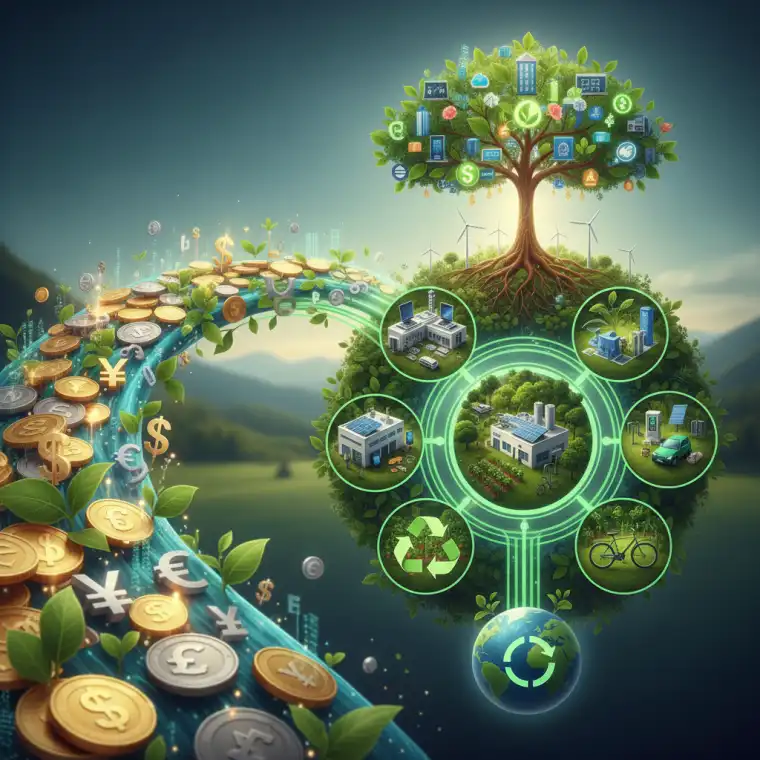
Sustainable Finance: Powering the Transition to Circular Economy Models

by Khaled Misbah | April 19, 2026 | No comments
 
Sustainable Finance: Powering the Transition to Circular Economy Models

Sustainable Finance: Powering the Transition to Circular Economy Models

Exploring the Synergies, Challenges, and Opportunities for a Regenerative Future
Same alt text as the featured image

Are you ready to see how the global economy shifts from a wasteful linear path to a regenerative circular future?

Think of a world where waste is a design flaw. It is not something you accept. How does finance drive this change?

True sustainability needs new funding. It needs a rethink of our economic systems. What part do you play in speeding up this evolution?

The circular economy concept is a vital solution to environmental problems and resource depletion. It keeps resources in use. It gets the most value from them. Then it recovers and regenerates products and materials. This differs from the traditional linear 'take-make-dispose' model. This shift needs new technology and policy. It also needs new financial flows and investment strategies.

Sustainable finance drives this transition. It provides capital and incentives to scale circular solutions across industries. Environmental action becomes more urgent. You must understand the link between sustainable finance and the circular economy. This matters for businesses, investors, and policymakers. How do financial mechanisms build a regenerative and resilient economic system?

Quick navigation

  • Understanding the Circular Economy: Principles and Pillars
  • The Imperative for Transition: Why Circularity Matters
  • Sustainable Finance as an Enabler: Mechanisms and Instruments
  • What this means for you
  • Real-World Impact: Case Studies and Emerging Trends
  • Risks, trade-offs, and blind spots
  • Main points

Understanding the Circular Economy: Principles and Pillars

The circular economy eliminates waste. It keeps resources in use. It differs from the linear economy, which follows a 'take-make-dispose' pattern. Experts like the Ellen MacArthur Foundation developed this model. It has three principles: design out waste and pollution, keep products and materials in use, and regenerate natural systems. What makes a circular economy different from linear systems?

Designing out waste means more than recycling. It means rethinking product lifecycles from the start. This involves choosing safe, renewable materials. It means designing for durability, repair, and disassembly. It creates processes that minimize environmental harm. Pollution is a design flaw, not a byproduct. You remove it with new thinking and material choices. This stance on waste management shifts focus from end-of-pipe solutions. It goes to upstream prevention. This reduces ecological footprints.

The second principle keeps products and materials in use. It promotes reuse, repair, remanufacturing, and recycling. Do not discard items after one use. The circular economy encourages models that extend product and component lifespans. Think of clothes subscription services. Consider modular electronics you upgrade easily. Look at industrial equipment designed for many refurbishments. This saves resources. It creates new economic paths and jobs in service and remanufacturing. It asks you to see products as valuable assets. They generate value over time, not as disposable items.

Regenerating natural systems returns biological materials safely to the biosphere. It preserves ecosystem integrity. This principle emphasizes renewable energy. It focuses on regenerating soil health and restoring biodiversity. It shows human economic activity links to planet health. It creates positive environmental impacts. Adopt regenerative practices. Industries contribute to ecological resilience. They improve natural capital, not just minimize harm. This view recognizes economic systems connect with natural processes. It advocates for a symbiotic relationship, not an extractive one.

The Imperative for Transition: Why Circularity Matters

A circular economy is not just an ideal. It is an urgent need. Pressing global challenges drive it. Your current linear economic system is unsustainable. It depletes finite resources fast. It generates much waste and pollution. This path leads to climate change, biodiversity loss, and resource scarcity. It threatens ecological stability and economic prosperity. Resource scarcity and climate change persist. Do you embrace a circular future?

Resource scarcity is a threat. Critical raw materials are finite. These include rare earth elements for electronics, sand, and water. They become harder and more expensive to extract. The linear model relies on constant extraction and consumption. This pressures resources. It leads to price volatility and geopolitical instability. A circular approach keeps materials in circulation. It offers a strategy for better resource security. It separates economic growth from finite resource consumption. It builds resilience against supply chain disruptions. It reduces dependence on primary resource markets. This creates a stable foundation for industries.

Environmental degradation drives this change. The linear economy contributes to greenhouse gas emissions, ocean plastics, and toxic waste. Manufacturing consumes much energy. Most of this still comes from fossil fuels. Discarded products fill landfills. They leach harmful substances into ecosystems. The circular economy addresses these issues directly. It promotes cleaner production, reduces waste, and regenerates natural capital. Embrace circular principles. You cut emissions, minimize pollution, and restore ecological health. This mitigates severe climate change impacts. It preserves biodiversity. This shift from damage control to proactive environmental stewardship benefits future generations.

The circular economy offers economic advantages. It gives more than environmental benefits. It fosters innovation. It creates new business models. It generates jobs in repair, remanufacturing, and digital services. These services help track and share materials. Businesses adopting circular strategies find cost savings. They reduce material use, enhance brand reputation, and increase customer loyalty. Circularity is not about less harm. It builds a more resilient, competitive, and innovative economy. This economy thrives within planet boundaries. It opens new markets and drives efficiency. This makes businesses robust against environmental and economic shocks.

Sustainable Finance as an Enabler: Mechanisms and Instruments

The transition to a circular economy needs more than good intentions and ideas. It demands substantial financial investment and supportive financial mechanisms. Sustainable finance bridges capital and circular solutions. Sustainable finance includes financial services. These services integrate environmental, social, and governance (ESG) criteria. They use these in business or investment decisions. This benefits clients and society. How does capital accelerate circular practices?

Green bonds are a prominent instrument. They are fixed-income instruments. They raise money for climate and environmental projects. Circular economy projects qualify for green bond issuance. These projects focus on waste reduction, resource efficiency, and sustainable product design. These bonds attract investors. Investors seek financial returns and positive environmental impact. They channel capital to businesses committed to circularity. Beyond green bonds, sustainability-linked loans and bonds exist. They tie financial terms, such as interest rates, to a company's sustainability targets. This includes circularity metrics. This creates a direct financial incentive for companies. They embed circular principles into operations. Their loans become cheaper as they improve their environmental footprint.

Impact investing plays a role. It involves investments to generate positive, measurable social and environmental impact. It also seeks a financial return. Impact investors seek companies and projects. These develop and scale circular solutions. Examples include new recycling technologies and product-as-a-service models. Venture capital and private equity funds dedicate capital to circular startups and growing businesses. They recognize the long-term potential. They also see market demand for sustainable alternatives. These investments provide early-stage and growth capital. Circular innovations move from concept to commercial reality. This fosters an ecosystem of circular enterprises.

Financial institutions develop products and services for the circular economy. This includes specialized lending facilities. It offers advisory services for companies transitioning to circular models. It provides risk assessment frameworks. These frameworks account for circularity benefits. Examples are reduced material costs and enhanced brand value. Blended finance combines public and private capital. It de-risks circular projects. This applies especially in developing economies. It attracts more investors. Integrate circularity into financial decision-making. Sustainable finance funds the transition. It shapes the future of business and investment. It makes circular models attractive and accessible.

What this means for you

The shift to a circular economy accelerates. Sustainable finance powers it. This is not an abstract concept. It is not confined to boardrooms and policy papers. It has tangible implications for you. It impacts individuals, businesses, and investors worldwide. Understand these implications. It helps you navigate the evolving economic landscape. You capitalize on emerging opportunities. You are an investor, business leader, or conscious consumer. How does this global shift impact your choices and opportunities?

For you as a consumer, this transition means more products and services. They design for durability, repair, and reuse. You find options for renting instead of buying. You return products at end of life. You easily repair items instead of replacing them. This leads to cost savings over time. It reduces your environmental impact. You get more value from your purchases. Your purchasing decisions matter. Choose circular products. Support sustainable businesses. You contribute to this systemic change. Demand for these products drives market innovation. It offers many sustainable choices.

For you as a business, embracing circular economy principles becomes a strategic imperative. It is not an option. It presents opportunities for innovation in product design. It optimizes supply chains. It creates new service models. Proactively integrate circularity. You achieve greater resource efficiency. You reduce waste disposal costs. You enhance brand reputation. You attract environmentally conscious customers and investors. If you cling to linear models, you risk being left behind. You face increasing regulatory pressure, rising material costs, and a diminishing competitive edge. This requires rethinking how you create and deliver value. Move towards resilience and regeneration. Forward-thinking businesses see this as a path to competitive advantage and long-term viability. They move beyond compliance to genuine innovation.

You as an investor face a transformative situation. Sustainable finance grows. Capital directs to companies with strong ESG performance and circular economy credentials. Integrate circularity into investment analysis. This helps identify resilient companies. They have lower environmental risks and greater long-term growth potential. Opportunities exist in sectors enabling the circular economy. These include advanced recycling, renewable energy, sustainable materials, and digital platforms for resource sharing. Understand and seek these opportunities. You position yourself for financial returns and positive societal impact. You align your portfolios with a sustainable future. The financial sector recognizes circularity. It is not just a moral good. It is a sound investment strategy. It de-risks portfolios and uncovers new growth areas.

Real-World Impact: Case Studies and Emerging Trends

The transition to a circular economy is not theoretical. It unfolds across sectors. It demonstrates tangible environmental and economic benefits. Many companies and regions pioneer circular models. They provide examples of how sustainable finance fuels this transformation. Beyond theory, where do you find evidence of the circular economy thriving? What new innovations appear?

Product-as-a-Service models rise. Philips, for example, offers lighting as a service. It does not sell light bulbs. Customers pay for the light they use. Philips owns the fixtures. It maintains, repairs, and recycles them. This shifts the incentive. It moves from selling products to designing durable, upgradeable, and energy-efficient systems. Major clothing brands explore rental and take-back programs. They ensure textiles remain in use longer. They are properly recycled at their life's end. Innovative financing structures often back these models. They reduce material consumption. They create new revenue streams. These streams build on service and longevity, not disposability.

In electronics, companies focus more on modular design and remanufacturing. Fairphone, for example, produces smartphones. You easily repair and upgrade them. This extends their lifespan and reduces electronic waste. Caterpillar leads in construction and mining equipment. It has a successful remanufacturing division. It restores used components to like-new condition. This saves raw materials and energy. Specialized sustainable finance vehicles support these initiatives. These include venture capital for startups. They include green loans for established companies retooling for circularity.

New trends include advanced recycling technologies. These break down complex materials into base components for reuse. Digital platforms also proliferate. They facilitate material tracking, resource sharing, and waste valorization. Technology enables this. Blockchain-enabled supply chains ensure material provenance. Online marketplaces exist for industrial by-products. Governmental policies and international frameworks align more to support circularity. The European Union's Circular Economy Action Plan provides a roadmap. It has legislative initiatives and funding mechanisms. These accelerate the transition across member states. These policy signals de-risk investments. They encourage private capital to flow into circular projects. Integrating circular economy metrics into corporate reporting and financial disclosure gains traction. This offers transparency and accountability for investors.

Risks, trade-offs, and blind spots

The circular economy offers much. The transition has complexities, risks, and trade-offs. An honest assessment of these challenges is essential. It helps you develop robust strategies. It helps you avoid unintended consequences. The circular economy offers much. Do you acknowledge its challenges and unintended consequences?

One challenge is the systemic change required. Moving from a linear to a circular economy demands a fundamental redesign of entire value chains. It is not just isolated components. This transforms product design, manufacturing processes, logistics, consumption patterns, and waste management infrastructure. This shift requires substantial investment. It needs coordination across multiple stakeholders, such as businesses, governments, and consumers. It requires overcoming entrenched linear mindsets. The scale of this transformation daunts some. Initial investment costs for new infrastructure or business models are high. This slows adoption for smaller enterprises. It also slows adoption for those with limited access to sustainable finance.

Complexity and scalability are concerns. Implementing circular models introduces complexities. This applies to reverse logistics and material recovery. Collecting, sorting, repairing, and remanufacturing products at scale efficiently requires sophisticated systems and technologies. These still evolve. Ensuring quality and safety of recycled or remanufactured materials challenges you. This applies to sensitive applications. Energy requirements for some recycling processes are substantial. This leads to trade-offs. This happens if processes rely heavily on non-renewable energy sources. Some recycling has a 'perverse incentive.' It becomes cheaper to produce virgin materials. This is a blind spot if not managed through regulation or market mechanisms.

Consumer behavior and acceptance present trade-offs. Many consumers desire sustainable products. But willingness to pay a premium for circular options is not universal. Willingness to embrace new consumption patterns, like renting or sharing, is not universal. Educational initiatives and clear communication foster adoption. A risk of 'greenwashing' exists. Companies superficially adopt circular language. They do not genuinely implement circular practices. Robust standards, certifications, and transparent reporting differentiate genuine circular efforts from marketing ploys. They ensure sustainable finance flows to impactful initiatives. Lack of clear metrics and accountability is a blind spot. It erodes trust. It undermines the transition's purpose.

Main points

  • The circular economy rethinks production and consumption. It moves beyond the 'take-make-dispose' model.
  • It focuses on designing out waste, keeping products and materials in use, and regenerating natural systems.
  • Sustainable finance is crucial for funding circular initiatives through green bonds, impact investments, and venture capital.
  • Benefits include resource security, reduced environmental impact, and new economic opportunities.
  • Key challenges involve systemic change, supply chain complexity, and consumer behavior shifts.
  • Policymakers and financial institutions play a role. They create supportive frameworks and incentives.
  • Measuring circularity and integrating it into financial disclosures develops.
  • Early adopters demonstrate the viability and profitability of circular business models across various sectors.

Embracing the circular economy is an economic opportunity. It is not just an environmental imperative. Explore how you or your organization contribute to and benefit from this shift today.

You didn't understand a certain point;

Ask the smart assistant and it will answer you based on the content of this article.

<div class="df-post"> <div class="df-post_image-container df-post_featured-image">&nbsp;<div class="separator" style="clear: both; text-align: center;"><a href="https://blogger.googleusercontent.com/img/a/AVvXsEgJxE3TY6CdeRs0Uwr3mCTSsF9UDJeEeUq2aJ8EykAWbr6gJzVQV4hwgDeNnYgJy87t-iUoNjy2Mr-qfWodYTF2bZqFnxGsuojlV3NuxUNGTVoJ8xgzkjuMC6x83vyer26wBH9dQOA8M8WUK97sE0FfA9vllKwijvWrxIWyckyhf8_o0qv26Usg90p1fxYE" style="margin-left: 1em; margin-right: 1em;"><img alt="Sustainable Finance: Powering the Transition to Circular Economy Models" data-original-height="760" data-original-width="760" height="640" loading="lazy" src="https://blogger.googleusercontent.com/img/a/AVvXsEgJxE3TY6CdeRs0Uwr3mCTSsF9UDJeEeUq2aJ8EykAWbr6gJzVQV4hwgDeNnYgJy87t-iUoNjy2Mr-qfWodYTF2bZqFnxGsuojlV3NuxUNGTVoJ8xgzkjuMC6x83vyer26wBH9dQOA8M8WUK97sE0FfA9vllKwijvWrxIWyckyhf8_o0qv26Usg90p1fxYE=w640-h640" title="Sustainable Finance: Powering the Transition to Circular Economy Models" width="640" /></a></div><br /></div> <header class="df-post__hero"> <h1 class="df-post__title">Sustainable Finance: Powering the Transition to Circular Economy Models</h1> <p class="df-post__subtitle">Exploring the Synergies, Challenges, and Opportunities for a Regenerative Future</p> </header> <article class="df-post__content"> <div class="df-post_image-container df-post_featured-image-duplicate" style="height: 0px; margin: 0px; overflow: hidden; padding: 0px; visibility: hidden;"> <img alt="Same alt text as the featured image" class="df-post__image" loading="eager" src="https://res.cloudinary.com/dkpms4xop/image/upload/f_webp,q_45,w_760,c_limit,fl_lossy,fl_force_strip,dpr_1.0/v1776627630/uuxmg0temhr7hchrg7ch.png" style="left: -9999px; position: absolute;" /> </div> <p class="df-post__hook">Are you ready to see how the global economy shifts from a wasteful linear path to a regenerative circular future?</p> <p class="df-post__hook">Think of a world where waste is a design flaw. It is not something you accept. How does finance drive this change?</p> <p class="df-post__hook">True sustainability needs new funding. It needs a rethink of our economic systems. What part do you play in speeding up this evolution?</p> <p>The circular economy concept is a vital solution to environmental problems and resource depletion. It keeps resources in use. It gets the most value from them. Then it recovers and regenerates products and materials. This differs from the traditional linear 'take-make-dispose' model. This shift needs new technology and policy. It also needs new financial flows and investment strategies.</p> <p>Sustainable finance drives this transition. It provides capital and incentives to scale circular solutions across industries. Environmental action becomes more urgent. You must understand the link between sustainable finance and the circular economy. This matters for businesses, investors, and policymakers. How do financial mechanisms build a regenerative and resilient economic system?</p> <div class="df-post__toc"> <p><strong>Quick navigation</strong></p> <ul> <li><a href="#section-1">Understanding the Circular Economy: Principles and Pillars</a></li> <li><a href="#section-2">The Imperative for Transition: Why Circularity Matters</a></li> <li><a href="#section-3">Sustainable Finance as an Enabler: Mechanisms and Instruments</a></li> <li><a href="#section-4">What this means for you</a></li> <li><a href="#section-5">Real-World Impact: Case Studies and Emerging Trends</a></li> <li><a href="#section-6">Risks, trade-offs, and blind spots</a></li> <li><a href="#section-7">Main points</a></li> </ul> </div> <h2 id="section-1">Understanding the Circular Economy: Principles and Pillars</h2> <p>The circular economy eliminates waste. It keeps resources in use. It differs from the linear economy, which follows a 'take-make-dispose' pattern. Experts like the Ellen MacArthur Foundation developed this model. It has three principles: design out waste and pollution, keep products and materials in use, and regenerate natural systems. What makes a circular economy different from linear systems?</p> <p>Designing out waste means more than recycling. It means rethinking product lifecycles from the start. This involves choosing safe, renewable materials. It means designing for durability, repair, and disassembly. It creates processes that minimize environmental harm. Pollution is a design flaw, not a byproduct. You remove it with new thinking and material choices. This stance on waste management shifts focus from end-of-pipe solutions. It goes to upstream prevention. This reduces ecological footprints.</p> <p>The second principle keeps products and materials in use. It promotes reuse, repair, remanufacturing, and recycling. Do not discard items after one use. The circular economy encourages models that extend product and component lifespans. Think of clothes subscription services. Consider modular electronics you upgrade easily. Look at industrial equipment designed for many refurbishments. This saves resources. It creates new economic paths and jobs in service and remanufacturing. It asks you to see products as valuable assets. They generate value over time, not as disposable items.</p> <p>Regenerating natural systems returns biological materials safely to the biosphere. It preserves ecosystem integrity. This principle emphasizes renewable energy. It focuses on regenerating soil health and restoring biodiversity. It shows human economic activity links to planet health. It creates positive environmental impacts. Adopt regenerative practices. Industries contribute to ecological resilience. They improve natural capital, not just minimize harm. This view recognizes economic systems connect with natural processes. It advocates for a symbiotic relationship, not an extractive one.</p> <h2 id="section-2">The Imperative for Transition: Why Circularity Matters</h2> <p>A circular economy is not just an ideal. It is an urgent need. Pressing global challenges drive it. Your current linear economic system is unsustainable. It depletes finite resources fast. It generates much waste and pollution. This path leads to climate change, biodiversity loss, and resource scarcity. It threatens ecological stability and economic prosperity. Resource scarcity and climate change persist. Do you embrace a circular future?</p> <p>Resource scarcity is a threat. Critical raw materials are finite. These include rare earth elements for electronics, sand, and water. They become harder and more expensive to extract. The linear model relies on constant extraction and consumption. This pressures resources. It leads to price volatility and geopolitical instability. A circular approach keeps materials in circulation. It offers a strategy for better resource security. It separates economic growth from finite resource consumption. It builds resilience against supply chain disruptions. It reduces dependence on primary resource markets. This creates a stable foundation for industries.</p> <p>Environmental degradation drives this change. The linear economy contributes to greenhouse gas emissions, ocean plastics, and toxic waste. Manufacturing consumes much energy. Most of this still comes from fossil fuels. Discarded products fill landfills. They leach harmful substances into ecosystems. The circular economy addresses these issues directly. It promotes cleaner production, reduces waste, and regenerates natural capital. Embrace circular principles. You cut emissions, minimize pollution, and restore ecological health. This mitigates severe climate change impacts. It preserves biodiversity. This shift from damage control to proactive environmental stewardship benefits future generations.</p> <p>The circular economy offers economic advantages. It gives more than environmental benefits. It fosters innovation. It creates new business models. It generates jobs in repair, remanufacturing, and digital services. These services help track and share materials. Businesses adopting circular strategies find cost savings. They reduce material use, enhance brand reputation, and increase customer loyalty. Circularity is not about less harm. It builds a more resilient, competitive, and innovative economy. This economy thrives within planet boundaries. It opens new markets and drives efficiency. This makes businesses robust against environmental and economic shocks.</p> <h2 id="section-3">Sustainable Finance as an Enabler: Mechanisms and Instruments</h2> <p>The transition to a circular economy needs more than good intentions and ideas. It demands substantial financial investment and supportive financial mechanisms. Sustainable finance bridges capital and circular solutions. Sustainable finance includes financial services. These services integrate environmental, social, and governance (ESG) criteria. They use these in business or investment decisions. This benefits clients and society. How does capital accelerate circular practices?</p> <p>Green bonds are a prominent instrument. They are fixed-income instruments. They raise money for climate and environmental projects. Circular economy projects qualify for green bond issuance. These projects focus on waste reduction, resource efficiency, and sustainable product design. These bonds attract investors. Investors seek financial returns and positive environmental impact. They channel capital to businesses committed to circularity. Beyond green bonds, sustainability-linked loans and bonds exist. They tie financial terms, such as interest rates, to a company's sustainability targets. This includes circularity metrics. This creates a direct financial incentive for companies. They embed circular principles into operations. Their loans become cheaper as they improve their environmental footprint.</p> <p>Impact investing plays a role. It involves investments to generate positive, measurable social and environmental impact. It also seeks a financial return. Impact investors seek companies and projects. These develop and scale circular solutions. Examples include new recycling technologies and product-as-a-service models. Venture capital and private equity funds dedicate capital to circular startups and growing businesses. They recognize the long-term potential. They also see market demand for sustainable alternatives. These investments provide early-stage and growth capital. Circular innovations move from concept to commercial reality. This fosters an ecosystem of circular enterprises.</p> <p>Financial institutions develop products and services for the circular economy. This includes specialized lending facilities. It offers advisory services for companies transitioning to circular models. It provides risk assessment frameworks. These frameworks account for circularity benefits. Examples are reduced material costs and enhanced brand value. Blended finance combines public and private capital. It de-risks circular projects. This applies especially in developing economies. It attracts more investors. Integrate circularity into financial decision-making. Sustainable finance funds the transition. It shapes the future of business and investment. It makes circular models attractive and accessible.</p> <h2 id="section-4">What this means for you</h2> <p>The shift to a circular economy accelerates. Sustainable finance powers it. This is not an abstract concept. It is not confined to boardrooms and policy papers. It has tangible implications for you. It impacts individuals, businesses, and investors worldwide. Understand these implications. It helps you navigate the evolving economic landscape. You capitalize on emerging opportunities. You are an investor, business leader, or conscious consumer. How does this global shift impact your choices and opportunities?</p> <p>For you as a consumer, this transition means more products and services. They design for durability, repair, and reuse. You find options for renting instead of buying. You return products at end of life. You easily repair items instead of replacing them. This leads to cost savings over time. It reduces your environmental impact. You get more value from your purchases. Your purchasing decisions matter. Choose circular products. Support sustainable businesses. You contribute to this systemic change. Demand for these products drives market innovation. It offers many sustainable choices.</p> <p>For you as a business, embracing circular economy principles becomes a strategic imperative. It is not an option. It presents opportunities for innovation in product design. It optimizes supply chains. It creates new service models. Proactively integrate circularity. You achieve greater resource efficiency. You reduce waste disposal costs. You enhance brand reputation. You attract environmentally conscious customers and investors. If you cling to linear models, you risk being left behind. You face increasing regulatory pressure, rising material costs, and a diminishing competitive edge. This requires rethinking how you create and deliver value. Move towards resilience and regeneration. Forward-thinking businesses see this as a path to competitive advantage and long-term viability. They move beyond compliance to genuine innovation.</p> <p>You as an investor face a transformative situation. Sustainable finance grows. Capital directs to companies with strong ESG performance and circular economy credentials. Integrate circularity into investment analysis. This helps identify resilient companies. They have lower environmental risks and greater long-term growth potential. Opportunities exist in sectors enabling the circular economy. These include advanced recycling, renewable energy, sustainable materials, and digital platforms for resource sharing. Understand and seek these opportunities. You position yourself for financial returns and positive societal impact. You align your portfolios with a sustainable future. The financial sector recognizes circularity. It is not just a moral good. It is a sound investment strategy. It de-risks portfolios and uncovers new growth areas.</p> <h2 id="section-5">Real-World Impact: Case Studies and Emerging Trends</h2> <p>The transition to a circular economy is not theoretical. It unfolds across sectors. It demonstrates tangible environmental and economic benefits. Many companies and regions pioneer circular models. They provide examples of how sustainable finance fuels this transformation. Beyond theory, where do you find evidence of the circular economy thriving? What new innovations appear?</p> <p>Product-as-a-Service models rise. Philips, for example, offers lighting as a service. It does not sell light bulbs. Customers pay for the light they use. Philips owns the fixtures. It maintains, repairs, and recycles them. This shifts the incentive. It moves from selling products to designing durable, upgradeable, and energy-efficient systems. Major clothing brands explore rental and take-back programs. They ensure textiles remain in use longer. They are properly recycled at their life's end. Innovative financing structures often back these models. They reduce material consumption. They create new revenue streams. These streams build on service and longevity, not disposability.</p> <p>In electronics, companies focus more on modular design and remanufacturing. Fairphone, for example, produces smartphones. You easily repair and upgrade them. This extends their lifespan and reduces electronic waste. Caterpillar leads in construction and mining equipment. It has a successful remanufacturing division. It restores used components to like-new condition. This saves raw materials and energy. Specialized sustainable finance vehicles support these initiatives. These include venture capital for startups. They include green loans for established companies retooling for circularity.</p> <p>New trends include advanced recycling technologies. These break down complex materials into base components for reuse. Digital platforms also proliferate. They facilitate material tracking, resource sharing, and waste valorization. Technology enables this. Blockchain-enabled supply chains ensure material provenance. Online marketplaces exist for industrial by-products. Governmental policies and international frameworks align more to support circularity. The European Union's Circular Economy Action Plan provides a roadmap. It has legislative initiatives and funding mechanisms. These accelerate the transition across member states. These policy signals de-risk investments. They encourage private capital to flow into circular projects. Integrating circular economy metrics into corporate reporting and financial disclosure gains traction. This offers transparency and accountability for investors.</p> <h2 id="section-6">Risks, trade-offs, and blind spots</h2> <p>The circular economy offers much. The transition has complexities, risks, and trade-offs. An honest assessment of these challenges is essential. It helps you develop robust strategies. It helps you avoid unintended consequences. The circular economy offers much. Do you acknowledge its challenges and unintended consequences?</p> <p>One challenge is the systemic change required. Moving from a linear to a circular economy demands a fundamental redesign of entire value chains. It is not just isolated components. This transforms product design, manufacturing processes, logistics, consumption patterns, and waste management infrastructure. This shift requires substantial investment. It needs coordination across multiple stakeholders, such as businesses, governments, and consumers. It requires overcoming entrenched linear mindsets. The scale of this transformation daunts some. Initial investment costs for new infrastructure or business models are high. This slows adoption for smaller enterprises. It also slows adoption for those with limited access to sustainable finance.</p> <p>Complexity and scalability are concerns. Implementing circular models introduces complexities. This applies to reverse logistics and material recovery. Collecting, sorting, repairing, and remanufacturing products at scale efficiently requires sophisticated systems and technologies. These still evolve. Ensuring quality and safety of recycled or remanufactured materials challenges you. This applies to sensitive applications. Energy requirements for some recycling processes are substantial. This leads to trade-offs. This happens if processes rely heavily on non-renewable energy sources. Some recycling has a 'perverse incentive.' It becomes cheaper to produce virgin materials. This is a blind spot if not managed through regulation or market mechanisms.</p> <p>Consumer behavior and acceptance present trade-offs. Many consumers desire sustainable products. But willingness to pay a premium for circular options is not universal. Willingness to embrace new consumption patterns, like renting or sharing, is not universal. Educational initiatives and clear communication foster adoption. A risk of 'greenwashing' exists. Companies superficially adopt circular language. They do not genuinely implement circular practices. Robust standards, certifications, and transparent reporting differentiate genuine circular efforts from marketing ploys. They ensure sustainable finance flows to impactful initiatives. Lack of clear metrics and accountability is a blind spot. It erodes trust. It undermines the transition's purpose.</p> <h2 id="section-7">Main points</h2> <ul> <li>The circular economy rethinks production and consumption. It moves beyond the 'take-make-dispose' model.</li> <li>It focuses on designing out waste, keeping products and materials in use, and regenerating natural systems.</li> <li>Sustainable finance is crucial for funding circular initiatives through green bonds, impact investments, and venture capital.</li> <li>Benefits include resource security, reduced environmental impact, and new economic opportunities.</li> <li>Key challenges involve systemic change, supply chain complexity, and consumer behavior shifts.</li> <li>Policymakers and financial institutions play a role. They create supportive frameworks and incentives.</li> <li>Measuring circularity and integrating it into financial disclosures develops.</li> <li>Early adopters demonstrate the viability and profitability of circular business models across various sectors.</li> </ul> <p>Embracing the circular economy is an economic opportunity. It is not just an environmental imperative. Explore how you or your organization contribute to and benefit from this shift today.</p> </article> </div>
Author

author : Khaled Misbah

Related topics you might like

Categories:

ESG Investing

Show latest articles (on/off)

📝 قسم "أحدث المقالات" مفعل.
لإخفائه، قم بإلغاء تفعيل "إظهار الأداة".

On/Off Side Menu

✅ لاظهار القائمة الجانبية قم بتفعيل هذه الأداة.
لإخفائها، قم بإلغاء تفعيل "إظهار الأداة" من الأعلى.

Legal & Technical Notice: GreenCore is an independent digital platform dedicated exclusively to technology analysis and knowledge sharing. All content is provided for informational and educational purposes only and does not constitute financial, investment, or professional advice. GreenCore does not provide investment recommendations or financial consultancy. Users are solely responsible for their own independent decisions.

Labels

  • CleanTech23
  • ESG Investing25
  • Solar Solutions17

Popular posts

  • Smart Energy Management Systems

    Smart Energy Management Systems

      Smart Energy Management Systems Your Guide to Unmatched Energy Efficiency and Major Cost Savings ...

  • Navigating the Evolving Landscape: Key Regulatory Trends in ESG Disclosure

    Navigating the Evolving Landscape: Key Regulatory Trends in ESG Disclosure

      Key Regulatory Trends in ESG Disclosure Understand the global and domestic forces shaping environmental, social, and g...

  • Smart Energy Management Systems (EMS) for Modern Manufacturing

    Smart Energy Management Systems (EMS) for Modern Manufacturing

    In today’s manufacturing landscape, energy is no longer a fixed overhead—it’s a strategic variable that can make or break profitability, sus...

  • Sustainable Finance: Powering the Transition to Circular Economy Models

    Sustainable Finance: Powering the Transition to Circular Economy Models

      Sustainable Finance: Powering the Transition to Circular Economy Models Exploring the Synergies, Challenges, and Opportu...

  • Powering Tomorrow: Scaling EV Charging Infrastructure for Large Fleets with Terawatt Precision

    Powering Tomorrow: Scaling EV Charging Infrastructure for Large Fleets with Terawatt Precision

      Powering Tomorrow: Scaling EV Charging Infrastructure for Large Fleets with Terawatt Precision This guide helps you plan...

Featured post

How Much Maintenance Do Solar Systems Really Need? A Comprehensive Guide
April 29, 2026

How Much Maintenance Do Solar Systems Really Need? A Comprehensive Guide

  How Much Maintenance Do Solar Systems Need? A Full Guide Understand the True Costs and Efforts Behind Sustainable Energ...

All rights reserved © GreenCore
New alerts
Loading...

المساعد الذكي للمدونة

أهلاً بك! أنا مساعدك الشخصي في مدونة GreenCore. كيف يمكنني مساعدتك اليوم؟ يمكنك سؤالي عن أي مقال أو موضوع في المدونة.

مدعوم بواسطة MOPlus

شرح وتوضيح الفقرة

Share to other applications

Telegram
Whatsapp
Twitter
Facebook
Tumblr
Reddit
LinkedIn
Pinterest
Email
Copy the article link
1935919520624377948